HAPS And Satellites: Which One Wins For Stratospheric Coverage?
1. The Question Itself Represents an underlying shift in the way we View the concept of coverage
In the past two decades, debate about reaching remote and under-served regions by air has been seen as a debate between ground infrastructure and satellites. With the advent of high-altitude platforms has opened up another option that doesn’t make sense in either category, which is precisely what draws attention to the differences. HAPS aren’t seeking to replace satellites in general. They’re competing with each other for instances where the physics behind operating at 20 kilometers instead of 35,000 or 500 miles produces better results. Finding out where that advantage is legitimate and where it’s not will be the main focus of this game.
2. It’s the latency that helps HAPS win Clearly
Time to travel for signals is determinable by distance. Distance is where stratospheric platforms enjoy the advantage of having a clear structural advantage over all orbital systems. Geostationary satellites are located around 35,786 km above the equator. This results in round-trip latency of around 600 milliseconds. It is able to be used for calls that have a noticeable delays, but difficult for real-time applications. Low Earth orbit constellations have greatly improved this situation working at 550 – 1,200 kilometers with latency in the 20 to 40 millisecond range. A HAPS vehicle at 20 kms has latency rates similar that of terrestrial satellites. In the case of applications that require responsiveness (industrial control systems, financial transactions, emergency communications direct-to-cell connectivity that difference is not marginal.
3. Satellites Win on Global Coverage and That’s Why It Matters
There is no stratospheric system currently in development that can cover the entire earth. It is true that a single HAPS vehicle covers a regional footprint, which is big by terrestrial standards, but not a complete. For global coverage, you’ll need multiple platforms that are spread throughout the world, each with their own operations including energy systems, power sources, and station keeping. Satellite constellations, and especially huge LEO networks, can blanket the earth’s surface with an overlap and coverage levels that stratospheric networks cannot replicate with existing vehicle numbers. For applications requiring truly universal coverage such as maritime tracking, global messaging, and polar coverage, satellites are the only option that is viable at scale.
4. Resolution and Persistence Favor HPS for Earth Observation
If the mission requires monitoring a specific region continuously -like tracking methane emission from an industrial corridor, watching a wildfire develop in real-time or monitoring the oil pollution being released from an offshore incident the ongoing close-proximity characteristics of a stratospheric platform results in data quality that satellites are unable to meet. Satellites operating in low Earth orbit travels over any given point on the surface for a few minutes at a time with revisit intervals measured in either days or hours, based on constellation size. A HAPS vehicle that remains above the same region for weeks delivers continuous observation in close proximity to sensors, allowing superior spatial resolution. For the purpose of stratospheric geo-observation it is more valuable than the global reach.
5. Payload Flexibility Is a Benefit of HAPS Satellites. Satellites Can’t quickly match
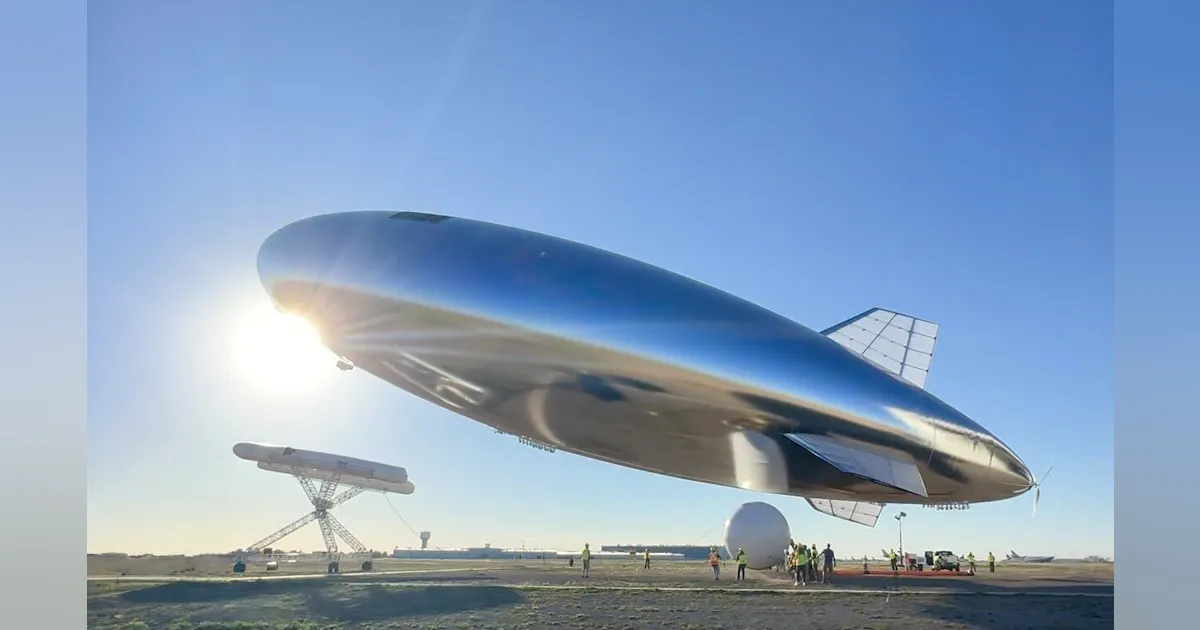
Once a satellite is launched, its payload is fixed. In order to upgrade sensors, swapping out communication hardware or adding new instruments require the launch of completely new spacecraft. A stratospheric platform returns in between missions to the ground which means its payload can be modified, reconfigured, or completely replaced as the requirements of missions change or new technology becomes available. Sceye’s airship’s design specifically accommodates substantial payload capacities, allowing combinations of communications antennas, sensor for greenhouse gases, and system for disaster detection on the same aircraft — a feature that requires multiple satellites to replicate, each with its own mission cost, launch slot, and orbit.
6. The Cost Structure is Significantly Different
Launching a satellite is a process that involves the costs of rockets as well as insurance, ground segment development and acceptance that hardware failures in orbit are a permanent write-off. Stratospheric platforms function more like aircraft – they can be recovered, examined to be repaired, repositioned, and then relaunched. It doesn’t mean they’re less expensive than satellites when measured on a per-coverage basis, but it impacts the risk profile and upgrade costs significantly. In the case of operators who are testing new products and entering markets the capability to retrieve and modify the platform of accepting hardware that orbits as a sunk cost offers a significant advantage in operation and is particularly relevant in the early commercial phases that HAPS segment is in.
7. HAPS Can Act as 5G Backhaul Where Satellites Don’t Effectively
The telecommunications structure that is made possible by a high-altitude platform station operating as a HIBS or being a cell tower that is located in the sky it is designed to interact with current modern mobile networking standards that satellite traditionally did not. Beamforming from a stratospheric telecommunications antenna can allow dynamic signal allocation across a broad coverage area, supporting 5G backhaul to ground infrastructure and direct-to device connections simultaneously. Satellites are becoming more capable in this field, however the nature of operating closer to ground gives stratospheric technologies an advantage in signal the strength of their signal, reuse of frequency, and compatibility with spectrum allocations specifically designed for terrestrial networks.
8. The Risks of Operational and Weather Change greatly between them.
Satellites, once they have been placed in stable orbits, generally are indifferent to weather conditions in the terrestrial. The HAPS vehicle operating in the stratosphere faces a more complex operational environment stratospheric winds patterns such as temperature gradients, the challenge of engineering to endure low-altitude night without losing station. The diurnal phase, which is the periodicity of solar energy supply and power draw at night is a design challenge each solar-powered HAPS is required to be able to solve. The advancements in lithium-sulfur battery energy density and solar cell efficiency are closing this gap, but it’s an important operational factor that satellite operators don’t have to face in the exact same way.
9. It’s a fact that They carry out different missions.
Distinguishing satellites from HAPS as an all-or-nothing contest misses the point of how non-terrestrial infrastructure is likely to grow. The most accurate view is a more complex structure that includes satellites with global reach and applications where universal coverage is the main factor as stratospheric platforms fulfill local persistence goals -connectivity in highly challenging environments, continuous monitoring of environmental conditions, disaster response, and 5G expansion into areas where it is not economically feasible to roll out terrestrial networks. Sceye’s positioning reflects exactly this premise: a platform that is specifically designed to work in the region of a specific location, for extended periods, with a sensor as well as a communications package that satellites simply cannot reproduce at that level and close proximity.
10. The Competition will ultimately sharpen Both Technologies
It is possible to argue that the rise of reputable HAPS programs has increased development in satellite technology and in turn. LEO constellation operators have increased the boundaries of coverage and latency, in ways that raise the standards HAPS must compete. HAPS developers have demonstrated constant regional monitoring capabilities, which is prompting satellite operators consider how to improve the resolution of sensors and revisit frequencies. For example, the Sceye and SoftBank partnership targeting Japan’s nationwide HAPS network, with the first commercial services set for 2026 is one of the clearest signals yet that stratospheric platforms have moved from theoretical competitor to an active participant to influence how the interplanetary connectivity market and the market for observation develops. Both technologies will be better to withstand the pressure. View the best Monitor Oil Pollution for site info including Sceye HAPS, space- high altitude balloon stratospheric balloon haps, sceye haps project status, Sustainable aerospace innovation, high-altitude platform stations definition and characteristics, Mikkel Vestergaard, softbank haps pre-commercial services japan 2026, stratospheric internet rollout begins offering coverage to remote regions, High altitude platform station, High altitude platform station and more.
Fire And Disaster Detection In The Stratosphere
1. The Detection Window is the most valuable thing You Can Get Extending
Every major disaster comes with a moment — sometimes measured in minutes, sometimes in hours — when earlier awareness would have changed the course of action. When a wildfire is identified, it covers half a hectare is an issue with containment. Similar fires that are discovered when it covers more than fifty hectares is a major crisis. A gas leak at work that is identified within the first 20 minutes can be contained before it turns into a public health emergency. The same gas release that was discovered after three hours, either through an incident report on the ground or a spacecraft passing overhead on a scheduled trip, has dispersed into a problem with no clean solution. Intending the detection window undoubtedly the most valuable thing improved monitoring infrastructure can achieve, and constant stratospheric observation is among the few strategies that change the window significantly rather than slightly.
2. The Wildfires are getting harder and harder To Monitor With the Existing Infrastructure
The intensity and frequency of wildfires over the past few years has overtaken the monitoring systems designed to track them. Underground detection networks guard towers, sensor arrays ranger patrols take up too little space too slow to detect fast-moving fires in their early stages. Aircrafts’ response is effective, but expensive, weather-dependent, and reactive rather than anticipatory. Satellites travel through any area in a sequence measured in hours, which implies that a fire that starts in the air, spreads, and is crowned between passes doesn’t provide early warning. The combination as well as faster spread rates triggered through drought, as well as complex terrain creates monitoring gap that conventional methods can’t structurally close.
3. Stratospheric Altitude Provides Persistent Wide-Area Visibility
A platform that operates from 20 kilometres or more above the ground can guarantee continuous visibility for a wide area of ground that spans several hundred kilometers — covering regions prone to fires, coastlines and forest margins as well as urban interfaces without interruption. Contrary to aircrafts it doesn’t need to return for fuel. Contrary to satellites, it does not disappear into the horizon during an annual cycle. For wildfire detection specifically, this enduring wide-area visibility indicates that the device is monitoring whenever fire starts, watching when spreading begins, and following the changes in fire behavior to provide a steady data stream, not a set of disconnected snapshots emergency managers must cross-check between.
4. Sensors for Thermal as well as Multispectral Sensors Are able to detect fires before smoke is visible.
One of the most efficient fire detection technologies doesn’t wait for visible smoke. Thermal infrared sensors can detect heat anomalies that suggest ignition before a fire has even produced any visible signs (for example, identifying hotspots in dry vegetation as well as smouldering fires under the canopy of forests and the early thermal signature of fires just beginning to take shape. Multispectral imaging provides additional capabilities through the detection of changes in vegetation condition, such as stressing on the moisture burning, drying, browningwarning signs of increased potential for fire in specific areas prior to the occurrence of any ignition event. A stratospheric based platform that carries the sensor and camera provides prompt warning of active fire and an in-depth understanding of where the next ignition is most likely, which is a qualitatively different type of alertness to the current situation that conventional monitoring.
5. Sceye’s Multi-Payload Strategy Combines Detection With Communications
One of many practical ramifications that arises from major disasters is that the infrastructure that people rely on for communication like mobile towers power lines, internet connectivity — is often among the first things to be destroyed or overwhelmed. A stratospheric-based platform carrying disaster detection sensors and a telecommunications payloads solve this issue by using a single vehicle. Sceye’s approach to mission design recognizes that observation and connectivity are complimentary functions, not as competing ones, which means the same platform that senses a developing wildfire can simultaneously provide emergency communication to those at ground level whose terrestrial networks have gone dark. The mobile tower in the sky isn’t just a witness to the disaster It keeps everyone in touch via it.
6. The Detection of Disasters extends well beyond Wildfires
Wildfires may be one of the most intriguing use cases to monitor the stratospheric environment over time, similar capabilities are available to a broader array of scenarios for disaster. Floods can be tracked in the course of their development across waterways and coastal zones. Earthquake aftermaths – with an impaired infrastructure, blocked roadways and displacement of populations- benefit from rapid wide-area assessment that ground teams cannot provide in a quick enough manner. Industrial accidents that release the toxic gas or oil into coastal waters generate signatures that are detectable by appropriate sensors at the stratospheric height. Finding out about climate catastrophes at a moment’s time across all these areas requires a monitoring layer that is present with a constant eye on the scene and able to distinguish from normal variations in environmental conditions and the signatures of developing emergencies.
7. Japan’s Disaster History Makes the Sceye Partnership Particularly Relevant
Japan has an disproportionately large portion of major earthquake events, faces regular typhoon seasons affecting populated coastal areas, and is a victim of had a long history of industrial events that require quick environmental monitoring. The HAPS partnership between Sceye and SoftBank that targets Japan’s national network as well as pre-commercial services for 2026, sits right in the middle of stratospheric connectivity with disaster monitoring capabilities. A nation with Japan’s disaster vulnerability and technological proficiency is arguably the first natural early adopter for stratospheric infrastructure, which combines reliability in coverage with real-time surveillance offering both the communication backbone is essential for disaster response and the monitoring layer which early warning systems require.
8. Natural Resource Management Benefits From the same Monitoring Architecture
The ability to sense and maintain used by stratospheric platforms in preventing wildfires and detecting disasters can be used in direct ways for natural resource management. They work on longer time scales but require similar monitoring continuities. Forest health monitoring (following the spread of disease along with illegal logging and vegetation changes — can benefit from the ability to monitor for slow-developing threats before they become acute. Monitoring of water resources across large areas of catchment, coastal erosion tracking, and monitoring of protected areas from interference all have applications where surveillance from a high-altitude platform generates actionable data that regular airborne or satellite surveys aren’t cost-effective enough to replace.
9. The Founder’s Mission Governs How Emergency Detection is a Must
Understanding the reasons Sceye place such an emphasis on monitoring of environmental hazards and the detection of disasters in lieu of treating connectivity as the primary mission and observation as a supplementary benefitis a matter of understanding the original idea that Mikkel Vestergaard founded the company. A background in applying advanced technology to tackle large-scale humanitarian challenges produces a different set of designs than a strictly commercial telecommunications focus would. The disaster detection capability isn’t installed on a connectivity device for the purpose of adding value. It’s a result of a belief in the fact that the stratospheric system should be actively used in cases of situations — such as climate natural disasters and environmental crises as well as humanitarian emergencies where more timely and accurate information transforms outcomes for the populations that are affected.
10. Persistent Monitoring Reconfigures the Relationship between Decisions and Data
The bigger change that stratospheric disaster detection can bring about doesn’t involve a speedier response to events that occur in isolation there’s a change in the way decision makers view the risk of environmental hazards over time. When monitoring is intermittent the decision about deployment of resources, preparedness for evacuations, and investment must be made under a great deal of uncertainty regarding how the conditions are. When monitoring is continuous it is a matter of reducing that uncertainty. Emergency managers who use the live data feeds of a persistent stratospheric platform above their areas of responsibility have a totally different position of information than those relying upon scheduled satellite passes and ground reports. The shift from regular snapshots to constant alertness to the current situation is the reason that stratospheric geo-observation from platforms like those being created by Sceye truly transformative, rather than more incrementally valuable. Follow the top Diurnal flight explained for blog info including whats haps, softbank sceye haps japan 2026, Stratospheric missions, HAPS technology leader, softbank sceye haps japan 2026, Cell tower in the sky, sceye aerospace, sceye disaster detection, what does haps stand for, High altitude platform station and more.